TradeboticsAI Page Factory AI Test 2026: Editorial QA Benchmark
The TradeboticsAI Page Factory AI Test is an editorial quality-assurance benchmark for evaluating whether an AI-assisted trading-technology page is accurate, useful, transparent and ready for human review. It examines research quality, factual support, trading-risk context, structural completeness and the separation of software capabilities from actual trading performance.
Affiliate Disclosure: TradeboticsAI may use affiliate relationships on eligible pages. A commercial relationship should not change the evaluation criteria, and compensation should not be presented as evidence that a platform is suitable, reliable or profitable.
Compare NinjaTrader’s current platform, tools, pricing and account requirements before deciding whether it fits your trading workflow. TradeboticsAI Page Factory AI Test should be checked against current provider documentation for the exact account and markets used.
Quick Answer
The test evaluates whether a page can move through an AI-assisted production workflow without sacrificing factual accuracy, originality or financial-risk context. A strong result requires verifiable sources, useful analysis, clear limitations and a final human editorial decision.
A pass should not be interpreted as proof that a trading product works or that a page will rank in search results. It means the content met a defined editorial checklist at the time of review, subject to later updates when pricing, software features, regulations or source material change.
Table of Contents
This is not a trading strategy, broker service, automated trading system or verified performance record. The test name also does not establish an accredited industry standard or an independent certification. Its practical purpose is to expose weak sourcing, unsupported product claims, repetitive writing and misleading descriptions of hypothetical results before publication. Total cost for TradeboticsAI Page Factory AI Test should include commissions, exchange fees, data, spread, slippage, and platform charges.
For a US futures audience, passing requires more than readable prose. A credible page must distinguish backtests, simulations and live trading; identify assumptions affecting performance; avoid guaranteed-return language; and direct readers toward primary sources when claims involve regulations, platform features, fees or market data.
What the Page Factory Test Is Designed to Measure

The benchmark measures research discipline rather than raw text generation. It checks whether major factual claims can be traced to current official documentation, regulatory material, platform specifications or other appropriate primary evidence. Unsupported details should be removed, qualified or marked for verification instead of being presented confidently.
It also measures whether the page answers a real reader question. Length, keyword placement and a polished format cannot compensate for missing explanations of setup requirements, costs, data quality, execution assumptions, failure modes or who should avoid the product or workflow being discussed. Live use of TradeboticsAI Page Factory AI Test requires tested order behavior, monitoring, reconnect handling, and manual recovery procedures.
The TradeboticsAI Page Factory AI Test should reject any price that lacks a current official source or documented verification date.
The Core Pass-or-Fail Criteria
Review the current NinjaTrader offer and compare it with your execution, market-data and risk-management requirements.
A passing page should have a clear purpose, a descriptive title, a concise answer and analysis that adds more than a rewritten vendor description. Each section should contribute new information, and repeated conclusions or mechanically varied sentences should be treated as defects rather than useful depth. Risk planning for TradeboticsAI Page Factory AI Test should define position size, stop logic, loss limits, and clear shutdown conditions.
The factual review should flag prices without dates, undocumented integrations, exaggerated uses of artificial intelligence and claims that software can predict markets. Google Search Central advises publishers to prioritize accuracy, quality and relevance when using generative AI, while warning that producing many low-value pages may violate its scaled-content-abuse policy.
For futures-related content, performance terminology is a separate checkpoint. Backtested or simulated outcomes must not be described as live results. NFA guidance notes that hypothetical performance does not represent actual trading and may inadequately reflect liquidity, slippage, financial risk or a trader’s ability to follow a system through losses.
Before publication, the TradeboticsAI Page Factory AI Test checks whether plan fees are separated from brokerage, exchange, data and infrastructure costs. A review of TradeboticsAI Page Factory AI Test should separate product capability from profitability claims and future trading performance.
How Trading and Technology Claims Should Be Verified
Product capabilities should be checked against current documentation rather than affiliate summaries or old reviews. Important verification targets include supported brokers, exchanges, contracts, operating systems, data feeds, order types, automation limits, cancellation terms and whether an advertised feature is live, beta-only or restricted to a higher-priced plan.
Trading claims require additional scrutiny because functionality does not equal profitability. A platform may correctly automate entries and exits while the underlying strategy still loses money. Reviewers should identify commissions, exchange and data fees, bid-ask spread, slippage, latency, contract roll treatment and any assumptions that could make a simulation look better than executable results.
When a claim cannot be confirmed, the correct action is to narrow or remove it. A model-generated citation is not evidence by itself; the linked source must exist, support the exact statement and remain applicable on the review date. Screenshots and archived records can help document time-sensitive pricing or feature checks. The practical fit of TradeboticsAI Page Factory AI Test depends on instruments, sessions, execution style, data access, and account rules.
The TradeboticsAI Page Factory AI Test requires backtested results to be distinguished clearly from paper-trading and live-account outcomes.
Testing Originality and Reader Value
Originality means more than passing a duplicate-text detector. The page should organize evidence into a useful decision framework, explain trade-offs and provide verification steps that a futures trader can actually follow. Generic definitions and paraphrased marketing copy should not dominate the article.
The test should also look for fabricated experience. An AI system should not claim that an editor opened an account, connected a broker, placed orders or measured latency unless those actions were performed and documented. Research-based conclusions must remain clearly separate from hands-on testing and user-reported experience. Current details for TradeboticsAI Page Factory AI Test should be rechecked whenever pricing, integrations, margin, data, or features change.
Execution reviews within the TradeboticsAI Page Factory AI Test should account for commissions, spread, slippage, latency and uncertain fills.
Publication Workflow and Ongoing Monitoring
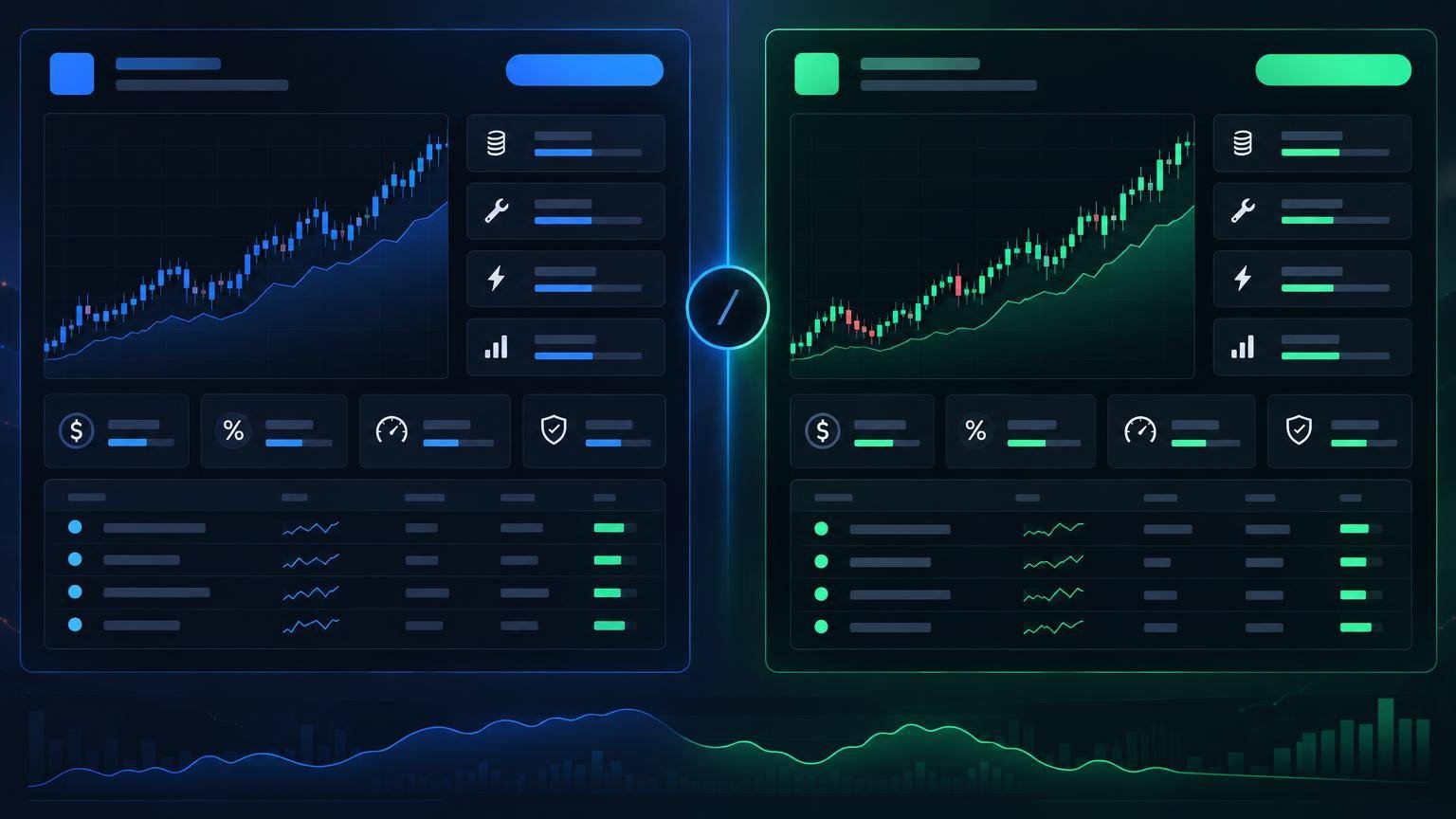
A practical workflow begins with a defined reader question and approved source set. Drafting is followed by claim-level verification, financial-promotion review, originality checks, copyediting and a final decision by a responsible human editor. High-risk claims should require stronger evidence than routine descriptive statements.
Publication is not the end of the test. Pages covering prices, integrations, regulations or rapidly changing software need scheduled reviews. Editors should monitor broken sources, material product changes and reader corrections, then update the review date and affected language instead of leaving outdated claims in place. Comparisons involving TradeboticsAI Page Factory AI Test are stronger when alternatives use identical cost, data, and execution assumptions.
A proper TradeboticsAI Page Factory AI Test flags unsupported claims that artificial intelligence can predict markets or guarantee returns.
Key Comparison Criteria
| Area | What to Check | Why It Matters |
|---|---|---|
| Source quality | Confirm material claims with official documentation, regulators, exchanges or original research. | Secondary summaries can be outdated, incomplete or influenced by commercial relationships. |
| Performance labels | Identify every result as hypothetical, simulated, backtested, paper-traded or live. | Readers may otherwise mistake modeled outcomes for money earned in actual markets. |
| Execution realism | Review commissions, spread, slippage, latency, liquidity and fill assumptions. | Optimistic execution inputs can materially inflate a strategy’s apparent performance. |
| Product scope | Verify supported assets, brokers, exchanges, data feeds and automation functions. | A useful feature may not work with the reader’s contracts, account or existing workflow. |
| Cost transparency | Separate subscription prices from data, exchange, brokerage and infrastructure expenses. | The advertised plan price may represent only part of the operating cost. |
| Editorial integrity | Check for invented experience, excessive repetition, hidden sponsorship and unsupported superlatives. | Fluent writing can still mislead readers when evidence and disclosures are weak. |
| Maintenance | Record the review date and establish triggers for rechecking time-sensitive claims. | Accurate launch-day content can become unreliable after a pricing or feature change. |
Practical Use Cases
Prepublication Review
An editor can run a draft through the benchmark before publication, isolate unsupported statements and return specific research tasks instead of accepting or rejecting the entire page subjectively.
When reviewing market data, the TradeboticsAI Page Factory AI Test examines source coverage, adjustment methods, missing records and contract-roll assumptions. Simulation can expose workflow problems in TradeboticsAI Page Factory AI Test before live capital is placed at risk.
Trading-Software Comparison Audit
The test can compare whether every platform is judged on consistent criteria such as data access, execution assumptions, integrations, pricing transparency and risk controls.
The TradeboticsAI Page Factory AI Test treats a working automation feature as a software capability rather than proof of a profitable strategy.
Backtest Claim Review
A reviewer can use the checklist to verify that modeled results are labeled correctly and accompanied by assumptions covering fees, slippage, liquidity, sample period and possible overfitting. Testing TradeboticsAI Page Factory AI Test should cover rejected orders, partial fills, stale quotes, disconnects, and software restarts.
For source verification, the TradeboticsAI Page Factory AI Test requires reviewers to open the cited material and confirm that it supports the exact claim.
Content Refresh Triage
Existing pages can be scored for stale prices, broken official sources, discontinued features and outdated regulatory statements so the highest-risk pages are updated first.
Human approval remains essential because the TradeboticsAI Page Factory AI Test cannot independently observe every factual or compliance problem. Leverage considerations for TradeboticsAI Page Factory AI Test include exchange margin, broker policies, liquidation rules, and account buffers.
Pros and Cons
Pros
- Creates a repeatable standard for reviewing AI-assisted financial content.
- Encourages primary-source research and claim-level verification.
- Makes simulated, backtested and live performance easier to distinguish.
- Surfaces hidden costs and operational risks before publication.
- Supports consistent comparisons across trading-technology pages.
Cons
- A checklist cannot determine whether every conclusion is correct or fair.
- A passing score does not prove trading performance, search visibility or regulatory compliance.
- Human reviewers can apply qualitative criteria inconsistently.
- Thorough verification increases research and maintenance time.
- Official documentation may omit practical defects experienced during real-world use.
Costs, Limitations, and Risks
No independently verified public price or commercial package is established by the test name itself. Any cost estimate should therefore be based on the actual workflow: research time, editorial review, source archiving, fact-checking tools and periodic content maintenance.
The TradeboticsAI Page Factory AI Test should document whether hands-on testing actually occurred before describing account setup or order execution.
Automation can reduce drafting time while increasing review obligations. A polished model output may contain invented features, mismatched citations or outdated prices that are difficult to notice without opening the underlying sources. The cost of correcting a misleading financial page can exceed the savings from faster generation. Data requirements for TradeboticsAI Page Factory AI Test should confirm real-time access, history, depth, permissions, and feed limitations.
A repeatable TradeboticsAI Page Factory AI Test includes regression checks for broken citations, changed features and stale pricing.
The benchmark cannot verify live execution quality unless controlled testing is performed. Broker routing, exchange conditions, connectivity, liquidity and account configuration can produce outcomes that are not visible in documentation or historical simulations.
Operational risk in the TradeboticsAI Page Factory AI Test includes API outages, rejected orders, duplicated orders and synchronization failures.
A pass is time-specific, not permanent. Material claims should be retested after software releases, pricing changes, regulatory updates or evidence that readers are encountering different results. Legal or compliance questions should be reviewed by qualified professionals rather than resolved by an editorial score alone.
Who It Is For and Who It Is Not For
Best For
- Editors building repeatable quality controls for trading and futures content.
- Researchers comparing platforms with a consistent evidence framework.
- Publishers using AI assistance while retaining human accountability.
- Traders who want to understand how software and performance claims should be checked.
Not Best For
- Anyone seeking a guaranteed profitable trading system or market forecast.
- Readers expecting an independent regulatory certification or compliance opinion.
- Publishers looking for a substitute for human fact-checking and editorial approval.
- Traders who want the test score to serve as evidence of live strategy performance.
Official Source and Verification
For current factual details, verify the relevant claims against Google Search Central: Guidance on Generative AI Content on Your Website. Product, exchange, broker, data, and policy details can change.
FAQ
Is the TradeboticsAI Page Factory AI Test a trading bot?
No. It is an editorial QA framework for evaluating content about futures and trading technology. It does not generate trade signals, route orders, manage a brokerage account or establish that any strategy is profitable.
Does passing the test mean a page was written without AI?
No. The benchmark focuses on accuracy, usefulness, sourcing and transparency rather than banning a particular production tool. AI-assisted content can still fail because of unsupported claims, and fully human-written content can fail for the same reason.
Does a passing result guarantee Google rankings?
No. Search visibility is determined by systems outside the publisher’s control. Google states that generative AI can assist with research and structure, but automatically producing many pages without reader value may conflict with its spam policies.
How should backtested performance be presented?
It should be explicitly identified as hypothetical or simulated and accompanied by material assumptions. The review should address fees, slippage, liquidity, data selection, contract rolls, position sizing and the possibility of overfitting. It should never be relabeled as live performance.
How often should a page be retested?
The interval depends on the subject. Pricing and fast-changing software may require frequent checks, while stable educational material can use a longer cycle. Any material feature release, regulatory change, broken source or credible reader correction should trigger an earlier review.
Can the test replace legal or compliance review?
No. It can flag potentially misleading wording and missing disclosures, but it is not a legal opinion. NFA members and other regulated businesses should evaluate applicable CFTC, NFA and firm-specific requirements with qualified compliance personnel.
Final Verdict
The TradeboticsAI Page Factory AI Test is most useful as a disciplined editorial gate, not a promotional badge. Its value comes from requiring evidence, separating product functionality from financial outcomes and making hidden assumptions visible to readers.
The strongest implementation combines automated checks with source-by-source human review. A page should pass only when it answers a genuine reader need, avoids invented experience, treats hypothetical results honestly and provides enough context for a US futures reader to investigate the product or claim independently.
Affiliate & Risk Disclosure
Affiliate Disclosure: TradeboticsAI may use affiliate relationships on eligible pages. A commercial relationship should not change the evaluation criteria, and compensation should not be presented as evidence that a platform is suitable, reliable or profitable.
Risk Disclosure: Futures and other leveraged products involve substantial risk and are not appropriate for every trader. Backtested, hypothetical, simulated and paper-trading results do not represent actual trading and may not reflect liquidity, slippage, fees, execution delays or the financial and psychological effects of real losses.
If NinjaTrader fits your requirements, review the official registration flow and current platform details before making a decision.