Futures vs Forex 2026: Key Differences, Costs & Risk
Futures vs Forex is a major decision for currency traders because the two markets can provide exposure to many of the same exchange-rate movements while using very different trading structures. Retail spot forex is generally traded over the counter through a dealer, while currency futures are standardized contracts traded on regulated futures exchanges. The differences affect pricing, transparency, leverage, expiration, commissions, counterparty structure and position sizing. This 2026 guide explains those differences and shows where standard and Micro FX futures may fit.
Quick Answer: Futures vs Forex in 2026
For traders who prefer standardized contracts, centralized exchange pricing and transparent contract specifications, futures can offer a cleaner market structure. Forex can provide flexible position sizing and direct access to currency pairs through retail dealers, but U.S. retail forex is generally OTC and the dealer acts as the counterparty. The best Futures vs Forex choice depends on trading size, costs, platform preference, leverage, holding period and whether centralized exchange execution matters to you.
Explore Currency Futures with NinjaTrader
Affiliate Disclosure: TradeboticsAI may earn compensation when a qualifying action is completed through an affiliate link, at no extra cost to you. This does not affect our editorial analysis.
Futures vs Forex 2026: Core Difference
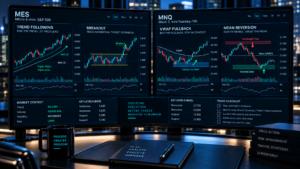
The central Futures vs Forex difference is where and how the trade takes place. Exchange-traded currency futures are standardized contracts. The exchange defines items such as contract size, expiration and minimum price increment, and trades are centrally cleared.
Retail spot forex works differently. The CFTC explains that unless you are trading currency futures or options on a regulated exchange, retail forex is generally an off-exchange transaction in which your dealer is your counterparty. When you buy, the dealer is selling to you, and when you sell, the dealer is buying from you.
This does not mean legitimate regulated forex dealers are inherently unsuitable. It means traders should understand that the execution model differs from an exchange order book. The distinction affects transparency, counterparty exposure, spreads and how prices are presented.
For the current regulatory explanation, review the official CFTC retail forex advisory.
Futures vs Forex Market Structure
Market structure is one of the strongest arguments in the Futures vs Forex comparison. Currency futures trade through regulated futures markets with standardized contracts and clearing arrangements. Multiple market participants interact around the same exchange-traded contract.
Retail OTC forex generally connects the customer to a forex dealer rather than directly to a centralized exchange. The dealer provides the trading platform, prices and execution conditions. The CFTC specifically advises customers to verify dealer registration and disciplinary history through the CFTC and National Futures Association before depositing funds.
Exchange-traded FX futures therefore appeal to traders who value a centralized marketplace and standardized contract terms. Forex appeals to traders who prefer the flexible unit sizing and currency-pair structure commonly offered by retail forex platforms.
Futures vs Forex: Main Differences Compared
| Factor | Currency Futures | Retail Spot Forex |
|---|---|---|
| Market structure | Exchange traded | Generally OTC |
| Counterparty structure | Central clearing framework | Dealer is generally customer counterparty |
| Contract sizing | Standardized contracts | Usually flexible units/lots |
| Expiration | Yes | Spot positions do not use futures-style contract expiration |
| Typical transaction cost | Commission + exchange/clearing fees + bid/ask spread | Spread, commission where applicable and possible financing |
| Pricing transparency | Centralized exchange market | Dealer-dependent pricing |
| Overnight financing | Reflected differently through futures pricing and contract structure | Roll/financing charges may apply to positions held overnight |
No single row makes one market universally superior. A serious Futures vs Forex comparison combines market structure with total trading cost, risk, liquidity and the exact strategy being used.
Futures vs Forex Leverage and Margin

Leverage is a major risk on both sides of Futures vs Forex. Futures use margin collateral to support a position whose notional value can be substantially larger than the amount deposited. Brokers may also offer intraday margin policies that differ from exchange initial and maintenance requirements.
Retail forex also uses margin. The CFTC notes that a 2% security deposit requirement corresponds to controlling a $100,000 forex position with $2,000 of collateral. U.S. rules generally impose a minimum 2% security deposit on major currency pairs and 5% on other pairs, effectively limiting maximum leverage relative to some offshore offerings.
Neither structure makes maximum available leverage a sensible position-sizing target. A trader should first define the maximum acceptable dollar loss and then choose quantity based on stop distance and market volatility.
Small margin requirements can make a trade look affordable while the underlying exposure remains large. That is why leverage deserves more attention than headline account minimums.
Futures vs Forex Costs: Spread, Commission and Financing
Total cost can materially change a Futures vs Forex decision. Currency-futures traders may pay broker commission, exchange fees, clearing fees, regulatory charges and the bid-ask spread. Some platforms may also charge for real-time market data or routing.
Retail forex brokers often build some or all compensation into the bid-ask spread, while certain account types charge an explicit commission. Positions held beyond the broker’s daily rollover may also incur or receive financing adjustments depending on the currency pair, interest-rate differential and dealer terms.
The CFTC specifically warns traders to include spreads, commissions, financing charges and other expenses when evaluating forex performance. Comparing only a broker’s advertised “zero commission” message can therefore be misleading.
For short-term trading, a difference of even a small number of ticks or pips can matter when the strategy trades frequently. Always calculate costs on a realistic round-trip basis.
Trading Hours and Liquidity
Both sides of Futures vs Forex provide extensive access during the global business week. Major retail forex pairs trade continuously through the international weekday currency session, while CME FX futures trade on Globex across an extended Sunday-through-Friday schedule with a daily maintenance interval.
CME currently lists Micro FX futures trading from Sunday through Friday, 5:00 p.m. to 4:00 p.m. Central Time, with a 60-minute daily break beginning at 4:00 p.m. CT. Exact holiday schedules and product hours should always be checked before trading.
Extended hours do not mean constant liquidity. Activity often changes significantly around London, New York and major economic releases. A strategy tested during the most liquid session can behave differently during thin overnight periods.
Liquidity should therefore be measured for the actual instrument and the actual hour you intend to trade, not simply assumed from the size of the global currency market.
Position Sizing in Futures vs Forex

Position sizing is where Futures vs Forex feels most different to many retail traders. Forex brokers commonly support different lot or unit sizes, allowing the trader to adjust currency exposure in relatively small increments.
Futures use predefined contract sizes. CME’s current 2026 FX product guide lists the standard Euro FX futures contract at 125,000 euros. The Micro EUR/USD contract is 12,500 euros, or one-tenth of the standard contract size.
Standardization makes the dollar value of a futures tick predictable once the contract specification is known. The trade-off is less infinite sizing flexibility than a unit-based forex account.
Micro FX contracts address some of that limitation by offering smaller standardized exposure. This can make exchange-traded currency futures more practical for accounts that cannot efficiently size a full standard contract.
Micro FX Futures in 2026
The Micro FX lineup is particularly important in a modern Futures vs Forex comparison. CME currently lists Micro contracts across several major currencies, including EUR/USD, GBP/USD, AUD/USD, JPY/USD, CAD/USD and CHF/USD.
| Micro FX Contract | Code | Contract Size | Typical Minimum Tick |
|---|---|---|---|
| Micro EUR/USD | M6E | 12,500 EUR | 0.0001 USD/EUR |
| Micro GBP/USD | M6B | 6,250 GBP | 0.0001 USD/GBP |
| Micro AUD/USD | M6A | 10,000 AUD | 0.0001 USD/AUD |
| Micro JPY/USD | MJY | 1,250,000 JPY | 0.000001 USD/JPY |
CME lists Micro EUR/USD at a $1.25 tick value, Micro AUD/USD at $1.00 and Micro GBP/USD at $0.625 per minimum tick. Verify current specifications before trading because contracts and exchange terms can change.
For traders already learning smaller futures contracts, our Micro Futures Trading 2026 guide explains tick values, leverage and position sizing.
Expiration and Rollover
Expiration is an important operational difference in Futures vs Forex. Currency futures have defined contract expirations. A trader who intends to maintain exposure must close, settle or roll the position according to the product’s contract rules and trading plan.
Spot forex does not use the same quarterly futures-expiration model. Instead, retail positions may be rolled from one trading day to the next, with financing adjustments potentially affecting the account.
This makes spot forex easier for traders who want to maintain the same currency-pair symbol continuously. Futures traders gain standardization but must monitor the active contract and know when liquidity migrates to the next expiration.
Expiration should never be ignored because certain FX futures are physically settled. Understand the exact settlement process and close or roll speculative positions well before delivery obligations become relevant.
Futures vs Forex for Day Trading
For day traders, Futures vs Forex frequently becomes a choice between centralized futures execution and flexible forex position sizing. Major currency futures can provide transparent exchange pricing, standardized tick values and a visible exchange order book.
Forex platforms can offer convenient currency-pair interfaces, small position increments and extensive weekday access. The execution model and spread still depend on the dealer and account type.
Futures may appeal more to traders who already use DOM, volume or exchange-based order-flow tools. Forex may appeal to traders whose strategy depends on highly granular unit sizing or who already use established spot-FX infrastructure.
Neither should be selected simply because of advertised leverage. Day-trading success depends more on execution cost, liquidity, risk limits and repeatability than on maximum buying power.
Futures vs Forex for Swing Trading
A swing trader considering Futures vs Forex has additional costs and mechanics to evaluate. Futures positions may require higher overnight margin and eventually need contract rollover. Forex positions may create daily financing or swap charges.
Those carrying costs can materially affect trades held for several days or weeks. A trader expecting a long-duration currency move should estimate the cost structure before deciding which market provides the cleaner implementation.
Economic events also matter. Central-bank decisions, employment reports, inflation data and geopolitical developments can create gaps or rapid currency moves in either market.
Longer holding periods do not make leverage safer. The position should still be sized around maximum acceptable loss rather than maximum broker buying power.
Futures vs Forex for Automated Trading

Automation adds another dimension to Futures vs Forex. Both markets support algorithmic and rule-based strategies, but the technical connection model differs. Futures platforms can connect strategy logic to exchange-routed brokerage infrastructure, while forex automation generally routes through the selected dealer or broker environment.
The strategy should include more than entry rules. Automated systems need position limits, stale-data detection, order-state reconciliation, duplicate-order protection, connection recovery and an emergency shutdown process.
Backtests also need realistic assumptions. Forex systems should account for spread and financing where relevant. Futures systems should account for commissions, exchange and clearing fees, slippage and contract rollover.
For futures automation, see our NinjaTrader API 2026 guide and Futures Trading Strategies 2026.
Futures vs Forex Pros and Cons
Currency Futures Pros
- Standardized exchange-traded contracts.
- Centralized pricing and clearing structure.
- Known contract multiplier and tick value.
- Micro FX contracts provide smaller standardized exposure.
- No dealer acts as the sole counterparty in the same way as retail OTC forex.
Currency Futures Cons
- Contracts expire and may need to be rolled.
- Standardized sizing can be less granular than forex units.
- Commissions, clearing and exchange fees apply.
- Market-data subscriptions can add cost.
- Leverage can create substantial losses.
Retail Forex Pros
- Flexible position sizing at many brokers.
- Wide selection of currency pairs.
- Continuous weekday currency-market access.
- No quarterly futures-style contract rollover for ordinary spot positions.
- Popular ecosystem of charting and automated-trading platforms.
Retail Forex Cons
- OTC market structure means pricing and execution are dealer dependent.
- Spreads can widen materially during volatile conditions.
- Overnight financing can affect longer-duration trades.
- High leverage can magnify losses.
- Unregistered offshore forex operations present major fraud risk.
Futures vs Forex Risks and Common Mistakes

The biggest Futures vs Forex mistake is choosing a market because it offers more leverage. Leverage increases exposure; it does not improve the probability that a trade will succeed.
Another mistake is comparing only headline spread or commission. Forex traders should consider financing and spread behavior during volatility. Futures traders should include exchange, clearing, regulatory and market-data costs where applicable.
Forex traders should also verify registration before funding a dealer. The CFTC has repeatedly warned about offshore and unregistered forex platforms, particularly those promoted through social media and those that create withdrawal problems.
Futures traders need to understand contract expiration and settlement. Both markets can produce losses larger than expected when leveraged positions move rapidly or liquidity deteriorates.
Practice execution before using meaningful capital. Our NinjaTrader Demo Account 2026 guide explains how futures simulation can be used before live execution.
Futures vs Forex FAQ
What is the biggest difference between futures and forex?
The largest Futures vs Forex difference is market structure. Currency futures are standardized exchange-traded contracts, while U.S. retail spot forex is generally traded over the counter with a forex dealer acting as counterparty.
Are futures safer than forex?
Neither market is inherently safe. Both use leverage and can produce substantial losses. Exchange-traded futures provide a different market and clearing structure, but the trader can still lose significant capital through poor position sizing or adverse market moves.
Which has more leverage, futures or forex?
The answer depends on the product, broker and account. U.S. retail forex security-deposit rules generally correspond to maximum leverage of 50:1 on major pairs and 20:1 on other pairs. Futures margin varies by contract, broker and whether the position is intraday or overnight.
Are forex futures the same as spot forex?
No. Currency futures are standardized derivatives with expiration dates traded through futures exchanges. Spot forex is generally an OTC currency transaction through a dealer or institutional market.
Do currency futures have spreads?
Yes. Exchange-traded futures have a bid and ask, so traders still experience a bid-ask spread in addition to commissions and applicable exchange or clearing fees.
Do futures have overnight swap fees?
They do not use the same retail spot-forex rollover mechanism. Financing and interest-rate expectations are reflected through futures pricing and basis instead of a typical dealer-applied daily forex swap charge.
What are Micro FX futures?
Micro FX futures are smaller standardized currency futures. Examples include M6E for Micro EUR/USD, M6B for Micro GBP/USD and M6A for Micro AUD/USD. Several are one-tenth the size of their corresponding standard contracts.
Which is better for beginners?
The easier product depends on the learner. Forex offers highly flexible sizing, while futures provide standardized contract specifications and centralized exchange pricing. Beginners should use simulation and understand leverage before trading either market live.
Which is better for day trading?
Futures can suit traders who want exchange-based pricing, DOM and standardized tick values. Forex can suit traders who prioritize flexible sizing and a familiar currency-pair interface. Execution quality and costs matter more than the label.
Can I automate both futures and forex?
Yes. Both can support automated strategies through compatible broker and platform technology. Test algorithms in simulation and include safeguards for order errors, connection failures and excessive position size.
Final Verdict: Futures vs Forex 2026
The Futures vs Forex decision comes down to structure and implementation. Currency futures are compelling for traders who want standardized contracts, centralized exchange pricing, known tick values and a regulated clearing framework. Micro FX futures make that structure accessible at smaller contract sizes than standard currency futures.
Retail forex remains attractive for flexible position sizing, broad currency-pair access and familiar spot-market workflows. The trade-off is an OTC dealer model in which pricing, execution and financing conditions depend heavily on the broker.
Neither market should be chosen because it offers high leverage. Compare total transaction cost, liquidity, position sizing, overnight holding requirements and regulatory structure first. Then practice the exact strategy before risking meaningful capital.
For traders already building a futures-focused workflow, the exchange-traded structure and availability of smaller Micro contracts make currency futures worth serious consideration alongside spot forex.