NinjaTrader Strategy Analyzer Review 2026: Powerful Backtesting Tool for Futures?

NinjaTrader Strategy Analyzer is NinjaTrader Desktop’s research environment for running historical analysis on NinjaScript-based automated trading strategies. In this 2026 review, we examine how NinjaTrader Strategy Analyzer handles backtesting, optimization, walk-forward analysis, basket testing, performance reports and Monte Carlo simulation, and whether it is a strong choice for futures strategy development.
The biggest advantage of NinjaTrader Strategy Analyzer is integration. A trader can develop logic in NinjaScript, test it on historical futures data, optimize parameters, evaluate out-of-sample periods and then move the same strategy toward simulation or live execution inside the broader NinjaTrader ecosystem.
That does not make historical results predictive. Backtests depend on data quality, order-fill assumptions, commission and slippage settings, strategy logic and the market regime being tested. A strong research process should therefore use the analyzer to challenge a strategy rather than simply search for the most attractive equity curve.
Quick Answer: Is Strategy Analyzer Worth Using?
Yes, especially for futures traders and C# developers who want backtesting, optimization and walk-forward validation inside NinjaTrader Desktop.
- Best for: NinjaScript futures strategies
- Core use: historical strategy backtesting
- Optimization: standard and genetic optimizers
- Validation: Walk Forward and Anchored Walk Forward Optimization
- Multi-market testing: instrument-list basket tests
- Robustness: Monte Carlo analysis and multiple performance views
- Important limitation: backtests can differ materially from real-time results
Explore NinjaTrader and Start With Futures Simulation →
Affiliate Disclosure: TradeboticsAI may receive compensation when visitors complete qualifying actions through certain links. Affiliate relationships do not determine our conclusions. Historical and simulated results are hypothetical and do not guarantee future performance.
Strategy Analyzer Overview
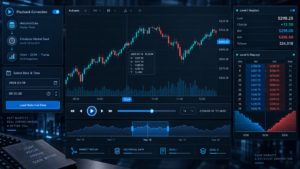
NinjaTrader Strategy Analyzer can be opened from NinjaTrader Desktop’s Control Center and is designed to run historical analysis on NinjaScript automated trading strategies. The workspace combines a settings panel with a performance-results area so the trader can configure a test and then review the resulting trades, statistics and charts.
NinjaTrader’s current documentation lists several major analysis paths inside the tool: standard backtests, strategy optimization, Walk Forward Optimization, Anchored Walk Forward Optimization, Multi-Objective Optimization, basket testing across instrument lists and Monte Carlo analysis.
This means the analyzer is not limited to answering whether a strategy made money historically. It can also help a developer examine parameter sensitivity, out-of-sample behavior, multi-market performance and the distribution of possible trade sequences.
Backtesting With Strategy Analyzer
A standard backtest evaluates how a NinjaScript strategy would have behaved across a selected historical period. To run one, the user needs historical data and a compatible NinjaScript strategy.
The trader selects the strategy, instrument or instrument list, date range, data series and relevant strategy inputs. The test engine then processes the historical data and produces a performance report based on the configured assumptions.
NinjaTrader Strategy Analyzer is particularly useful for structured rule-based systems because every historical entry and exit is generated from the same code. That makes it easier to compare changes objectively than discretionary chart review.
However, the output is still theoretical. If the test uses unrealistic fills, ignores transaction costs or over-optimizes parameters, the resulting performance can look much stronger than a live implementation would likely achieve.
Strategy Analyzer Backtest Settings
The quality of a test depends heavily on configuration. Important settings can include the selected instrument, historical date range, bar type or data series, strategy parameters, commission assumptions and order-fill processing.
NinjaTrader also allows the Strategy Analyzer to use locally stored data rather than automatically downloading historical data from the connected provider. This can be useful for large research runs where repeatedly requesting data would slow the process.
For serious research, document the settings used for every test. If a strategy’s results cannot be reproduced because data, session template or fill assumptions changed between runs, the research process becomes much less reliable.
NinjaTrader Strategy Analyzer Optimization

Optimization repeatedly backtests different combinations of strategy inputs and ranks the results according to a selected optimization fitness metric.
For example, a strategy might expose inputs for a moving-average period, stop distance and profit target. Instead of testing one combination manually, NinjaTrader Strategy Analyzer can evaluate many combinations across defined minimum, maximum and increment values.
NinjaTrader supports numerous optimization-fitness criteria and also allows advanced developers to create custom optimization logic through NinjaScript.
The danger is straightforward: the more combinations tested, the easier it becomes to find a parameter set that fits historical noise. Optimization should therefore be followed by validation on data that was not used to select the parameters.
Default vs Genetic Optimization
NinjaTrader includes a Default optimizer and a Genetic optimizer. The Default approach evaluates parameter combinations according to the configured ranges, while the Genetic algorithm is designed to search large parameter spaces more efficiently.
Genetic optimization can save substantial time when exhaustive testing would require an impractical number of backtest iterations. The trade-off is that a heuristic search does not necessarily test every possible combination.
For relatively small parameter spaces, exhaustive testing can make the response surface easier to inspect. For very large spaces, genetic optimization can be a practical research tool, but the winning result still requires out-of-sample validation.
Walk Forward Optimization
NinjaTrader Strategy Analyzer includes Walk Forward Optimization, which separates an in-sample optimization period from a subsequent out-of-sample test period.
The workflow first optimizes strategy inputs on a historical segment. NinjaTrader then takes the selected parameters and evaluates them on later data that was not used in that optimization. The process repeats as both windows move forward through time.
This is a stronger validation method than optimizing on an entire dataset and judging the strategy on the same historical information. The out-of-sample portions provide evidence about whether parameter choices remain useful beyond the data used to select them.
Walk-forward analysis does not eliminate overfitting, but it raises the standard of evidence required before a strategy progresses toward simulation.
Anchored Walk Forward Optimization
Anchored Walk Forward Optimization uses a similar idea but expands the optimization window from a fixed starting point while moving the out-of-sample test period forward.
This allows the strategy to use an increasing body of historical information during each optimization cycle. The best parameters from that expanding in-sample period are then evaluated on the next test period.
Whether anchored or rolling walk-forward is more appropriate depends on the strategy and research hypothesis. The important point is that NinjaTrader Strategy Analyzer supports both approaches rather than forcing every system into one validation structure.
Multi-Objective Optimization
A strategy should not necessarily be optimized on net profit alone. A parameter set with the highest profit can also have an unacceptable drawdown or unstable trade distribution.
NinjaTrader’s Multi-Objective Optimization uses multiple performance objectives to identify combinations where no obvious alternative dominates across all selected metrics. This creates a more balanced way to inspect trade-offs between competing goals.
A developer might care about profit, drawdown and another risk or consistency metric at the same time. Multi-objective analysis can expose parameter regions that would be ignored by a single-metric ranking.
Basket Testing Multiple Futures Markets

NinjaTrader Strategy Analyzer can backtest, optimize or walk-forward optimize an instrument list rather than only one market. NinjaTrader calls this basket testing.
For a futures strategy, a basket might include MES, MNQ, MYM, M2K or a broader group such as equity indices, energy and metals. The resulting report shows each instrument individually and also provides combined performance values.
This is useful because a strategy that works only on one contract may be exploiting a highly specific historical pattern. A concept that behaves reasonably across several related or unrelated markets can provide stronger evidence of generality.
Basket testing is not the same as a full portfolio-allocation engine with shared real-time capital constraints, but it is a valuable robustness test for strategy logic.
Performance Reports and Strategy Metrics
After a backtest, NinjaTrader provides detailed performance information rather than only total net profit. Traders can inspect trades, summary statistics, cumulative results and other performance views.
Useful metrics can include:
- Total net profit
- Gross profit and gross loss
- Profit factor
- Maximum drawdown
- Number of trades
- Average trade
- Winning and losing trade statistics
- Time-based and trade-based performance views
No single metric should determine whether a strategy is robust. A high profit factor from a tiny trade sample can be less convincing than a more moderate result supported by many independent observations.
Monte Carlo Simulation
Monte Carlo analysis examines how different arrangements of the observed trade results can affect the distribution of outcomes. This can provide additional perspective on drawdown and sequence risk.
A historical backtest shows one realized sequence of wins and losses. A different ordering of those same trade outcomes can produce a substantially different equity path even when average expectancy is unchanged.
NinjaTrader Strategy Analyzer includes Monte Carlo tools in its broader performance-analysis workflow, giving traders another way to evaluate whether their capital and risk assumptions are reasonable.
Monte Carlo results remain dependent on the original backtest. If the strategy logic or fill assumptions are unrealistic, randomizing those results does not make the underlying model reliable.
Historical Fill Processing and Backtest Realism
Order-fill assumptions are one of the most important parts of historical strategy testing. A bar can contain a high and low that touch both a stop and a target without revealing the exact intrabar sequence unless the test uses more granular information.
NinjaTrader documents different historical fill-processing considerations to help developers understand how orders are simulated during backtests.
Scalping strategies and systems with tight stops are especially sensitive to these assumptions. A small change in fill logic, commission or slippage can materially change the results.
For this reason, NinjaTrader Strategy Analyzer should be treated as the first stage of validation rather than the final proof of execution quality.
Strategy Analyzer Backtest vs Real-Time Trading
NinjaTrader explicitly documents discrepancies that can occur between historical backtests and real-time strategy results.
Live trading introduces factors a historical engine cannot perfectly reproduce, including:
- Network latency
- Exchange queue position
- Partial fills
- Real slippage
- Changing liquidity
- Broker responses
- Connection interruptions
A strong historical strategy should therefore progress to simulation and, where appropriate, Market Replay or forward testing before any live deployment is considered.
Strategy Analyzer for MES and MNQ
NinjaTrader Strategy Analyzer is a natural research tool for MES and MNQ because both Micro E-mini contracts are widely used by retail futures traders and share liquid underlying markets with ES and NQ.
A trader can test the same strategy logic on MES and MNQ while accounting for each contract’s tick value, volatility, commission assumptions and session characteristics.
Researchers should also pay close attention to futures contract rollover and the historical series used in a long backtest. Continuous futures data can simplify research but may not reproduce every detail of trading individual expiring contracts.
Micro contracts reduce contract size relative to the corresponding E-mini products, but they do not remove leverage or strategy risk.
Recommended Strategy Analyzer Workflow
A disciplined process can make NinjaTrader Strategy Analyzer much more valuable.
- Define the strategy first. Write down the entry, exit, session and position-sizing rules before optimizing.
- Run a basic backtest. Confirm that orders and logic behave as intended.
- Add realistic costs. Include commissions and conservative slippage assumptions.
- Inspect parameter stability. Look for broad stable regions rather than one isolated best value.
- Use out-of-sample validation. Apply Walk Forward or Anchored Walk Forward testing where appropriate.
- Test multiple markets. Use basket testing to examine whether the underlying logic generalizes.
- Review drawdown and trade distribution. Do not evaluate net profit alone.
- Use Monte Carlo context. Examine sequence and drawdown sensitivity.
- Forward test in simulation. Verify behavior against incoming or replayed market data.
- Use strict live risk controls. Historical performance never guarantees future results.
Strategy Analyzer Pros and Cons
Pros
- Integrated with NinjaScript and NinjaTrader Desktop
- Historical backtesting
- Default and Genetic optimization
- Walk Forward Optimization
- Anchored Walk Forward Optimization
- Multi-Objective Optimization
- Basket testing across instrument lists
- Monte Carlo analysis
- Detailed performance reports
Cons
- Requires a rule-based NinjaScript strategy
- Historical fills are simulations
- Optimization can encourage overfitting
- Data quality materially affects results
- Complex tests can consume substantial processing time
- Backtests cannot perfectly reproduce live execution
Who Should Use Strategy Analyzer?
NinjaTrader Strategy Analyzer is best suited to futures traders, NinjaScript developers and systematic researchers who want to test explicit trading rules inside the same platform ecosystem used for simulation and execution.
It is especially useful when the user wants to answer questions such as:
- Did this strategy work historically?
- How sensitive are results to parameter changes?
- Does it work on data not used for optimization?
- Does the logic generalize across multiple futures markets?
- How severe could drawdowns become under different trade sequences?
It is less useful for a purely discretionary trader whose entry and exit decisions cannot be translated into objective rules. In that case, Market Replay may provide a more appropriate practice environment.
Research Futures Strategies With NinjaTrader
Use backtesting, optimization and simulation to challenge strategy assumptions before considering live automated futures execution.

Official NinjaTrader Strategy Analyzer Documentation
For current test types, properties and performance-analysis behavior, review the
official NinjaTrader Strategy Analyzer documentation
.
NinjaTrader Strategy Analyzer FAQ
What is NinjaTrader Strategy Analyzer?
NinjaTrader Strategy Analyzer is NinjaTrader Desktop’s historical-analysis environment for backtesting, optimizing and reviewing NinjaScript automated trading strategies.
Can NinjaTrader Strategy Analyzer backtest futures strategies?
Yes. It can test compatible NinjaScript strategies on historical futures data when the required historical data is available.
Does Strategy Analyzer support optimization?
Yes. NinjaTrader provides Default and Genetic optimizer algorithms and also supports custom optimization development through NinjaScript.
What is Walk Forward Optimization?
Walk Forward Optimization selects parameters on an in-sample historical period and then tests those parameters on a later out-of-sample period before repeating the process through time.
What is Anchored Walk Forward Optimization?
Anchored Walk Forward expands the in-sample optimization period from a fixed starting point and tests the selected parameters on subsequent out-of-sample periods.
Does NinjaTrader Strategy Analyzer support multiple objectives?
Yes. Multi-Objective Optimization can evaluate parameter combinations across multiple optimization goals rather than using only one performance metric.
Can Strategy Analyzer test multiple futures contracts?
Yes. Basket testing allows Backtest, Optimization and Walk Forward tests to use an instrument list and display both individual and combined results.
Does Strategy Analyzer include Monte Carlo analysis?
Yes. Monte Carlo tools are included in the broader Strategy Analyzer performance-analysis workflow.
Can I use MES and MNQ in Strategy Analyzer?
Yes, provided the required historical data is available and the NinjaScript strategy is configured for those instruments.
Can backtest results differ from live trading?
Yes. Live trading introduces latency, queue position, liquidity changes, broker responses, partial fills and real slippage that historical tests cannot reproduce perfectly.
Does a profitable Strategy Analyzer backtest prove a strategy works?
No. Historical profitability can result from overfitting, favorable data, unrealistic fills or one particular market regime. Out-of-sample and forward validation are still required.
Can I use NinjaTrader Strategy Analyzer without coding?
The analyzer requires a compatible strategy. Traders can use preinstalled sample strategies for learning, while custom systematic strategies generally require Strategy Builder or NinjaScript development.
Is NinjaTrader Strategy Analyzer good for automated trading?
It is useful for researching automated strategy logic before simulation or live deployment, but it is not a substitute for live risk controls and operational testing.
Should I optimize for maximum net profit?
Not automatically. Optimizing one metric can produce fragile strategies. Traders should examine drawdown, trade count, parameter stability and out-of-sample behavior as well.
Is Strategy Analyzer better than Market Replay?
They serve different purposes. Strategy Analyzer is stronger for systematic historical research, while Market Replay is better for interactive practice and validating real-time platform behavior against a replayed session.
NinjaTrader Strategy Analyzer Final Verdict 2026
NinjaTrader Strategy Analyzer is one of NinjaTrader Desktop’s strongest tools for systematic futures research because it combines basic historical backtesting with several deeper validation methods.
Standard backtests provide the first layer. Optimization helps researchers explore parameter ranges. Walk Forward and Anchored Walk Forward analysis add out-of-sample validation. Multi-Objective Optimization helps expose trade-offs between competing performance goals, while basket testing examines whether a concept can survive across multiple markets.
Monte Carlo analysis and detailed performance reports add further context around drawdown, trade distribution and sequence risk.
The main limitation is universal to backtesting: historical execution is simulated. No amount of optimization can perfectly reproduce live queue position, latency, liquidity or future market regimes.
That is why the strongest use of NinjaTrader Strategy Analyzer is not to manufacture an impressive backtest. It is to eliminate weak ideas, identify fragile assumptions and determine which strategies deserve further testing in simulation or Market Replay.
For futures traders who build systematic strategies with NinjaScript, NinjaTrader Strategy Analyzer is a powerful 2026 research environment and a logical bridge between strategy development and controlled forward testing.
Explore NinjaTrader and Start With Futures Simulation →
Risk Disclosure: Futures and options on futures involve substantial risk and are not suitable for every investor. Historical backtests, optimizations, walk-forward tests, Monte Carlo simulations and simulated results are hypothetical. Live results can differ materially because of slippage, liquidity, latency, queue position, connectivity, market-regime changes and other factors. Historical performance does not guarantee future results.
Affiliate Disclosure: TradeboticsAI may receive compensation if you use an affiliate link on this page. This does not increase the price you pay and does not determine our editorial conclusions.