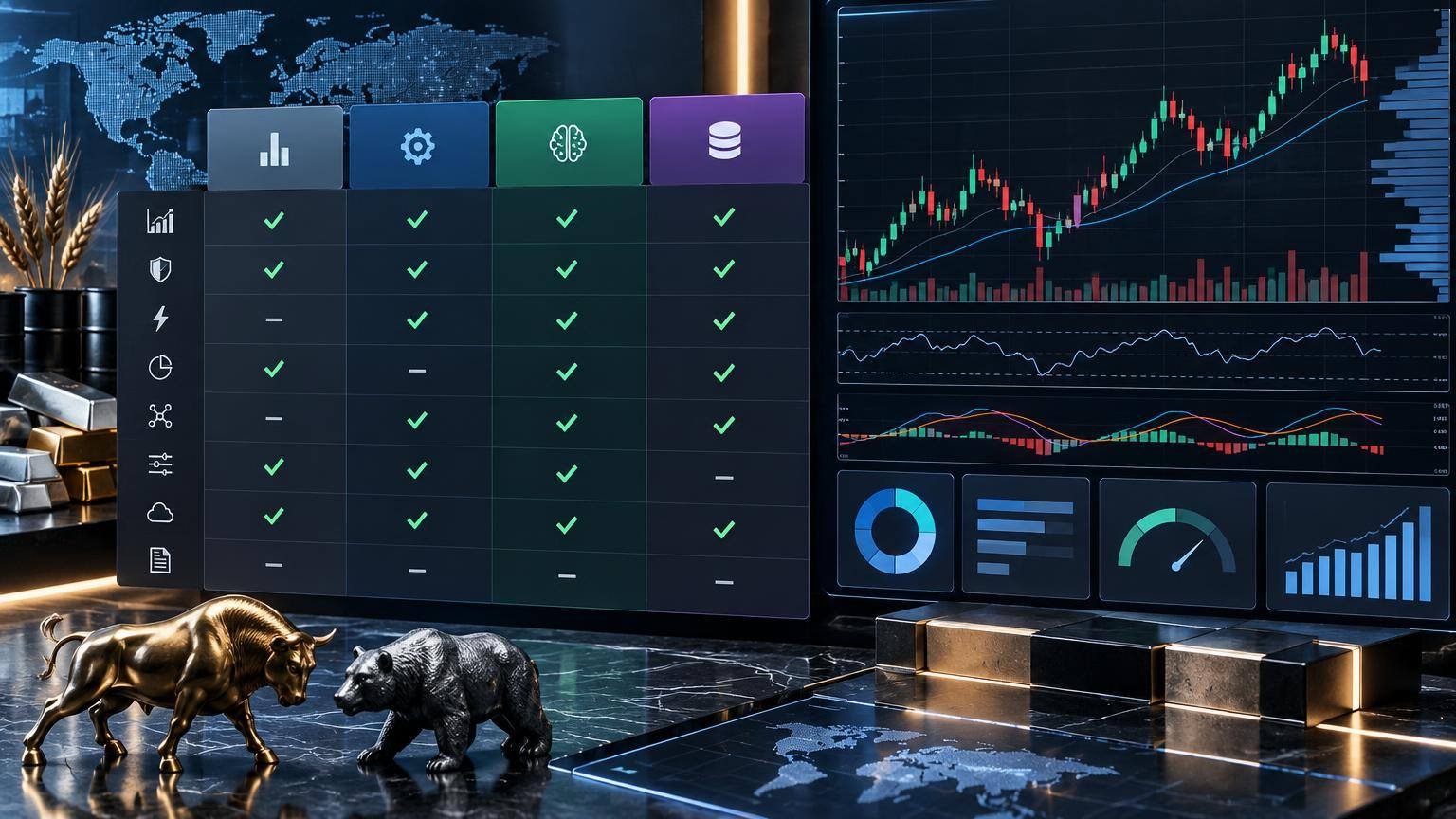
TradeboticsAI Page Factory AI Test 2026: A Practical Review Framework
TradeboticsAI Page Factory AI Test is a structured way to evaluate an AI-assisted trading tool before connecting it to a live futures account. The goal is not to assume that the word “AI” means better performance. Instead, the test focuses on evidence: how the system is built, how results are measured, what costs apply, and whether simulated or backtested performance survives realistic live-market conditions.
This page is written for U.S. traders researching automated and AI-assisted futures technology in 2026. It is an educational review framework, not a promise of performance, a solicitation to trade, or personalized financial advice.
Compare NinjaTrader’s current platform, tools, pricing and account requirements before deciding whether it fits your trading workflow.
Quick Answer
On comparisons, TradeboticsAI Page Factory AI Test should use the same criteria as competing platforms.
On costs, TradeboticsAI Page Factory AI Test should include commissions, data fees and platform charges.
The TradeboticsAI Page Factory AI Test should be treated as a due-diligence checklist rather than a simple pass-or-fail score. A credible AI trading system should clearly distinguish backtested, simulated, and live results; identify the markets and time periods tested; explain execution assumptions; disclose subscriptions and trading costs; and provide enough information for a trader to understand the system’s limitations.
The strongest test result is not the highest historical return. It is a combination of transparent methodology, realistic costs, controlled risk, independently verifiable live evidence, reliable infrastructure, and clear user controls. If a product emphasizes guaranteed profits, extraordinary win rates, or effortless returns while avoiding detailed evidence, that is a major warning sign.
Affiliate Disclosure
On maintenance, TradeboticsAI Page Factory AI Test should be reviewed after material software updates.
On execution, TradeboticsAI Page Factory AI Test should be tested with realistic slippage and fill assumptions.
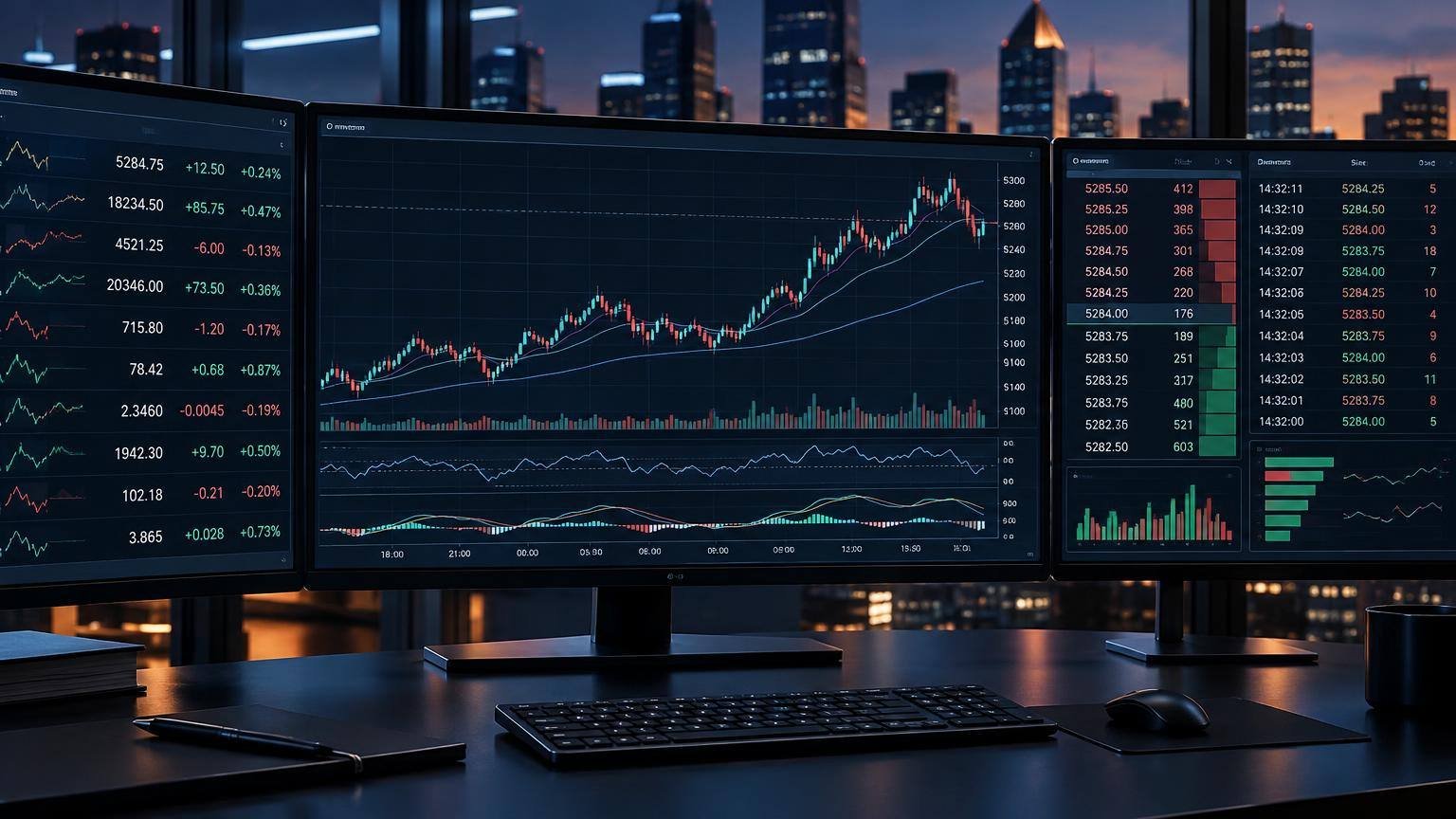
TradeboticsAI.com may receive compensation when readers use certain links or purchase eligible products and services. Compensation does not determine our editorial conclusions. We do not treat affiliate relationships as proof that a platform is suitable, profitable, regulated, or appropriate for any individual trader.
Table of Contents
On integrations, TradeboticsAI Page Factory AI Test should be checked for compatibility and permission limits.
On risk, TradeboticsAI Page Factory AI Test should be paired with defined position and loss limits.
- What the TradeboticsAI Page Factory AI Test Means
- How We Evaluate an AI Trading System
- Results, Evidence, and Testing Standards
- Costs and Hidden Expenses
- Pros and Cons
- Practical Use Cases
- Risks and Limitations
- Who It Is For and Who It Is Not For
- FAQ
- Final Verdict
- Affiliate & Risk Disclosure
What the TradeboticsAI Page Factory AI Test Means
On order handling, TradeboticsAI Page Factory AI Test should be tested for the required order types.
On workflow, TradeboticsAI Page Factory AI Test should fit the trader’s markets, sessions and order types.
Review the current NinjaTrader offer and compare it with your execution, market-data and risk-management requirements.
The phrase “AI trading” can describe several very different technologies. A system might use machine learning to classify market conditions, generative AI to summarize news, statistical models to rank setups, or ordinary rule-based automation marketed with an AI label. These distinctions matter because each type of system has different failure modes.
The TradeboticsAI Page Factory AI Test is designed to ask a basic question: does the technology have enough transparent, realistic evidence to justify further investigation? It is not designed to predict whether a particular strategy will make money in the future.
For futures traders, the evaluation should include the contract or contracts traded, session times, chart or data frequency, position sizing, leverage, margin assumptions, order types, maximum position limits, and behavior during market closures or data interruptions. A strategy that appears attractive on a continuous historical chart may behave very differently when spreads widen, liquidity falls, or orders are filled at less favorable prices.
Regulators have repeatedly warned that AI branding does not remove ordinary market risk. The U.S. Commodity Futures Trading Commission’s advisory on AI trading bots warns that artificial intelligence cannot predict sudden market changes and that claims of guaranteed or unusually high returns deserve skepticism.
How We Evaluate an AI Trading System
On monitoring, TradeboticsAI Page Factory AI Test should provide enough information to diagnose failures.
On data, TradeboticsAI Page Factory AI Test should be checked for coverage, latency and historical depth.
1. Product and provider transparency
A legitimate evaluation begins with the provider. The product name, operating company, support channels, terms of service, privacy policy, pricing, and data-handling practices should be identifiable. Traders should also understand whether the platform is software, a signal service, a managed account, a brokerage integration, or a combination of these.
Marketing language should be separated from verifiable facts. Statements such as “institutional-grade,” “self-learning,” “near-perfect accuracy,” or “hands-free income” do not explain how a system works. A useful provider should describe the intended use, supported brokers or platforms, required data, typical latency, user permissions, and the safeguards that stop unintended orders.
2. Strategy transparency
Full source code is not always necessary, but a user should receive enough information to understand the strategy’s operating boundaries. Important questions include:
- Which futures markets and contract months are supported?
- Does the system generate signals, place orders, or both?
- Can it trade during economic releases, overnight sessions, and low-liquidity periods?
- What conditions cause an entry, exit, pause, or emergency shutdown?
- Does the model change automatically, and if so, how are changes reviewed?
- Can the trader set daily loss limits, trade limits, and maximum exposure?
3. Execution and operational controls
Automation introduces technology risk in addition to market risk. The test should examine authentication, API permissions, account segregation, order confirmations, duplicate-order prevention, logging, alerts, and recovery procedures. Read-only access is materially different from permission to submit and cancel orders.
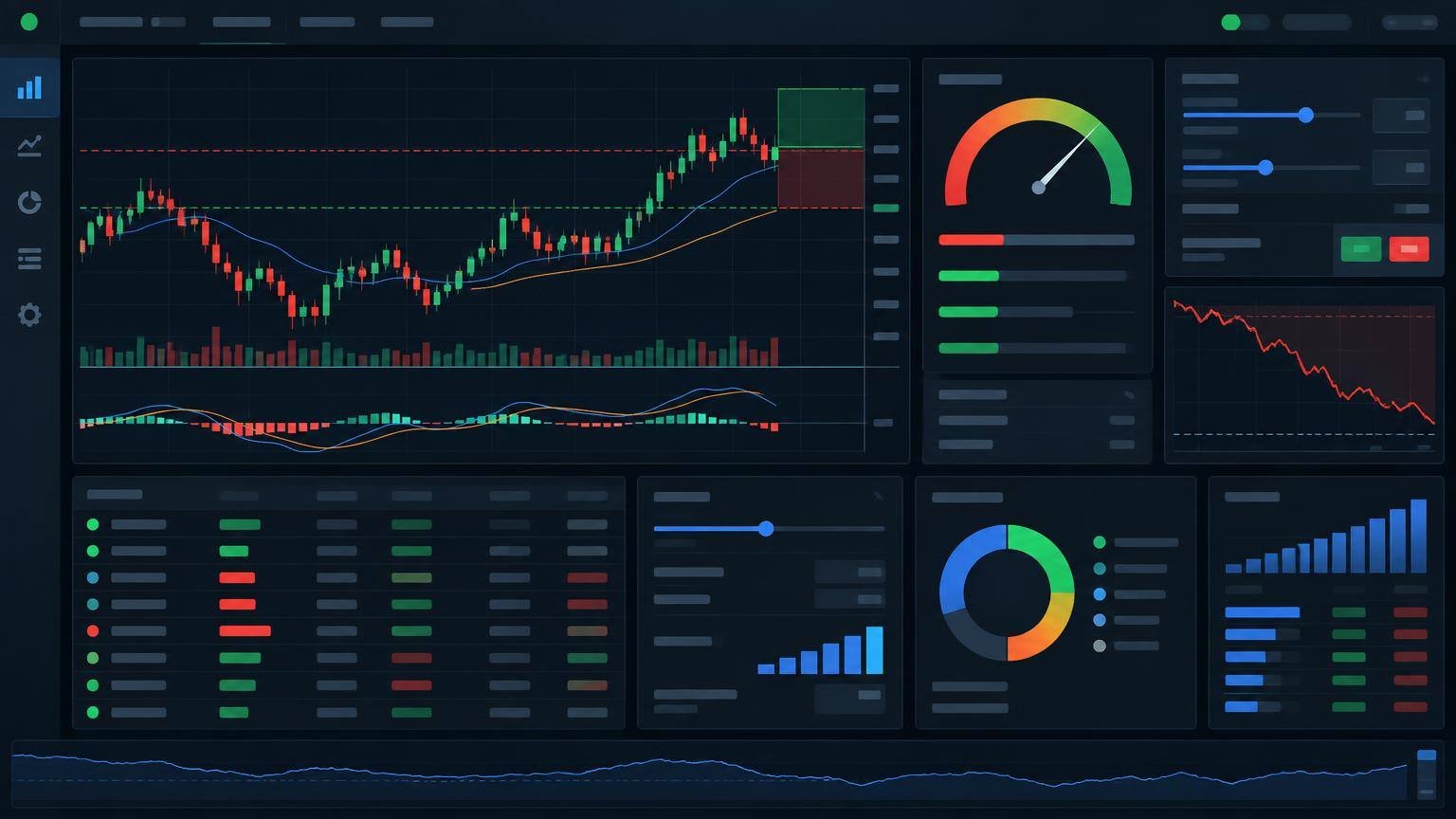
A robust system should make it easy to stop trading. Traders should know what happens if the internet connection fails, a broker rejects an order, market data becomes stale, a contract rolls, or the model produces an invalid output. A visually impressive dashboard is not a substitute for operational controls.
Results, Evidence, and Testing Standards
On strategy testing, TradeboticsAI Page Factory AI Test should not be judged from a small sample.
On reliability, TradeboticsAI Page Factory AI Test should be tested for disconnects and recovery behavior.
Performance claims should always identify the type of result being shown. Backtests use historical data and assumptions. Simulated results use paper or demo execution. Live results involve real orders and real costs. These categories are not interchangeable.
| Result type | What it shows | Main limitation |
|---|---|---|
| Backtested | How a defined rule set would have behaved on historical data | May be affected by overfitting, survivorship bias, data quality, and unrealistic fills |
| Simulated | How the system behaves in a demo or paper-trading environment | May not reproduce live slippage, liquidity, rejection, or emotional pressure |
| Live | Actual trading activity under real market conditions | A limited sample may not represent future performance or different market regimes |
A useful test looks beyond net profit. It reviews maximum drawdown, average trade, profit factor, losing streaks, exposure, turnover, volatility, margin usage, and performance by market regime. A strategy that made money only during one unusually favorable period may be less useful than a slower strategy with better risk controls.
Out-of-sample testing is especially important. If the model was tuned on one dataset and then evaluated on the same data, the result may describe the development process rather than a repeatable edge. Walk-forward testing, untouched validation periods, and live observation can reduce—but not eliminate—the risk of overfitting.
Independent verification is stronger than screenshots. A third-party record, broker statement, time-stamped execution history, or other auditable evidence can help establish whether results reflect actual trading. Even then, past performance does not guarantee future results.
Costs and Hidden Expenses
On pricing, TradeboticsAI Page Factory AI Test should be reviewed when platform or exchange fees change.
The subscription price is only one part of the cost of an AI futures workflow. A realistic budget should include platform fees, market-data fees, brokerage commissions, exchange and regulatory fees, bid-ask spread, slippage, charting or hosting costs, and possible charges for premium models or additional accounts.
There may also be indirect costs. An automated strategy can generate more trades than expected, increase commission drag, consume buying power, or create tax and recordkeeping complexity. A system that requires a specific broker, data feed, virtual private server, or paid integration may have a lower advertised price than its real monthly cost.
Before using real money, calculate a break-even threshold that includes recurring fees and estimated trading friction. If a strategy’s historical edge disappears after reasonable costs are added, the result should not be considered robust.
Pros and Cons
On usability, TradeboticsAI Page Factory AI Test should be compared using repeatable day-to-day tasks.
Potential advantages
- Can help organize large amounts of market data and produce repeatable alerts.
- May reduce some discretionary errors caused by inconsistent rule-following.
- Can support scenario testing before a trader risks live capital.
- May provide monitoring, journaling, and execution records in one workflow.
- Can help experienced traders automate clearly defined, limited tasks.
Important disadvantages
- Historical performance can be misleading when assumptions are unrealistic.
- AI outputs may be wrong, unstable, or difficult to explain.
- Automation can magnify losses when a model, connection, or integration fails.
- Subscription, data, brokerage, and execution costs can materially reduce results.
- Complex systems may encourage users to trade markets or size positions they do not understand.
Practical Use Cases
On automation, TradeboticsAI Page Factory AI Test should be tested before any live deployment.
The most defensible use cases are limited and measurable. A trader might use an AI tool to summarize overnight market information, classify volatility, scan for conditions that match a predefined playbook, or notify the user when a risk limit is approached. These applications keep a human decision-maker in the loop.
Another use case is research assistance. A trader can compare a strategy across instruments, test sensitivity to transaction costs, or identify periods where performance deteriorated. The output should be treated as a starting point for verification, not as an automatic trading instruction.
Fully automated execution is a higher-risk use case. It requires carefully limited permissions, a tested broker connection, independent risk controls, and a process for reviewing every material model or software update. Traders should consider beginning with observation or paper trading and moving gradually only if the system behaves as expected.
Risks and Limitations
On backtesting, TradeboticsAI Page Factory AI Test should use realistic costs and execution assumptions.
Futures involve leverage, which can magnify both gains and losses. A small price movement can create a large percentage change in account equity, and losses may exceed an initial deposit depending on the account and product. Margin requirements can change, and positions may be liquidated when an account no longer satisfies requirements.
AI-specific risks include data leakage, corrupted inputs, model drift, overfitting, prompt or configuration errors, hallucinated explanations, and dependence on an outside model provider. A model can also perform poorly when market structure changes. The CFTC’s responsible-AI materials identify concerns including data quality, explainability, privacy, business continuity, and errors in high-impact automated decisions.
There are also cybersecurity and counterparty risks. API keys, account credentials, and trading instructions must be protected. A platform outage can prevent monitoring or order management at the moment it is needed. Before connecting an account, confirm what permissions are granted, how credentials are stored, and how access can be revoked.
Who It Is For and Who It Is Not For
On simulation, TradeboticsAI Page Factory AI Test should be evaluated separately from live performance.
It may be appropriate for
- Experienced futures traders who understand contract specifications and margin.
- System developers testing a defined strategy under controlled conditions.
- Traders who can review logs, verify fills, and monitor technology failures.
- Users willing to begin with research or simulation before considering live execution.
It may not be appropriate for
- Beginners seeking guaranteed income or effortless trading.
- Anyone unable to afford a complete loss of trading capital.
- Users who cannot monitor automated positions or respond to outages.
- Traders who do not understand the underlying futures contract or its margin rules.
- Anyone being pressured to deposit money quickly or pay in an unusual manner.
FAQ
On controls, TradeboticsAI Page Factory AI Test should support clear stops, limits and emergency procedures.
Is the TradeboticsAI Page Factory AI Test a trading signal?
No. It is an evaluation framework for reviewing AI-assisted trading technology. It does not issue buy or sell signals and does not predict returns.
Does AI make a futures strategy more profitable?
Not automatically. AI may improve research, classification, or workflow automation, but it can also introduce new errors and operational risks. Performance must be tested after realistic commissions, spreads, slippage, and data costs.
Should I trust a backtest?
A backtest can be useful, but it is not proof of future performance. Review the data, assumptions, contract rolls, out-of-sample results, execution model, and complete cost structure. Treat simulated and backtested results as different from live trading.
What is the biggest warning sign?
Guaranteed returns, unusually high win rates, pressure to deposit funds, vague descriptions of the strategy, or refusal to provide independent evidence should all be treated as serious warning signs. The CFTC specifically advises skepticism toward trading systems marketed as high-profit and low-risk.
Can I use an AI tool with a futures broker?
Possibly, but compatibility and permissions vary. Confirm that the broker permits the integration, understand the API permissions, test order behavior in a simulator, and establish a manual shutdown procedure before considering live use.
Final Verdict
On market data, TradeboticsAI Page Factory AI Test should match the products and sessions being traded.
The TradeboticsAI Page Factory AI Test is best understood as a disciplined filter for AI trading claims. A system should not receive a favorable assessment simply because it uses machine learning, produces attractive charts, or reports strong historical returns. The meaningful questions are whether its evidence is verifiable, its assumptions are realistic, its costs are fully disclosed, and its risk controls work under stress.
For most traders, the sensible progression is education, independent verification, backtesting, paper trading, limited observation, and only then a carefully controlled live evaluation if the technology remains credible. Even a well-designed system can lose money, malfunction, or become unsuitable when market conditions change.
Use the test to slow down decision-making, challenge promotional claims, and understand the complete operating environment. In futures trading, avoiding an unreliable system can be just as important as finding a promising one.
Affiliate & Risk Disclosure
On setup, TradeboticsAI Page Factory AI Test should be documented so tests can be repeated consistently.
Affiliate relationships may influence how products and services are presented, but they do not eliminate the need for independent research. Futures, options, forex, digital assets, and automated trading systems involve substantial risk. You can lose some or all of the money allocated to trading, and leverage may increase losses. Nothing on this page is a recommendation, guarantee, or promise of future results. Review official product documentation, broker requirements, applicable regulations, and your own circumstances before taking action.
If NinjaTrader fits your requirements, review the official registration flow and current platform details before making a decision.