How Do AI Trading Bots Work? Complete Guide for 2026
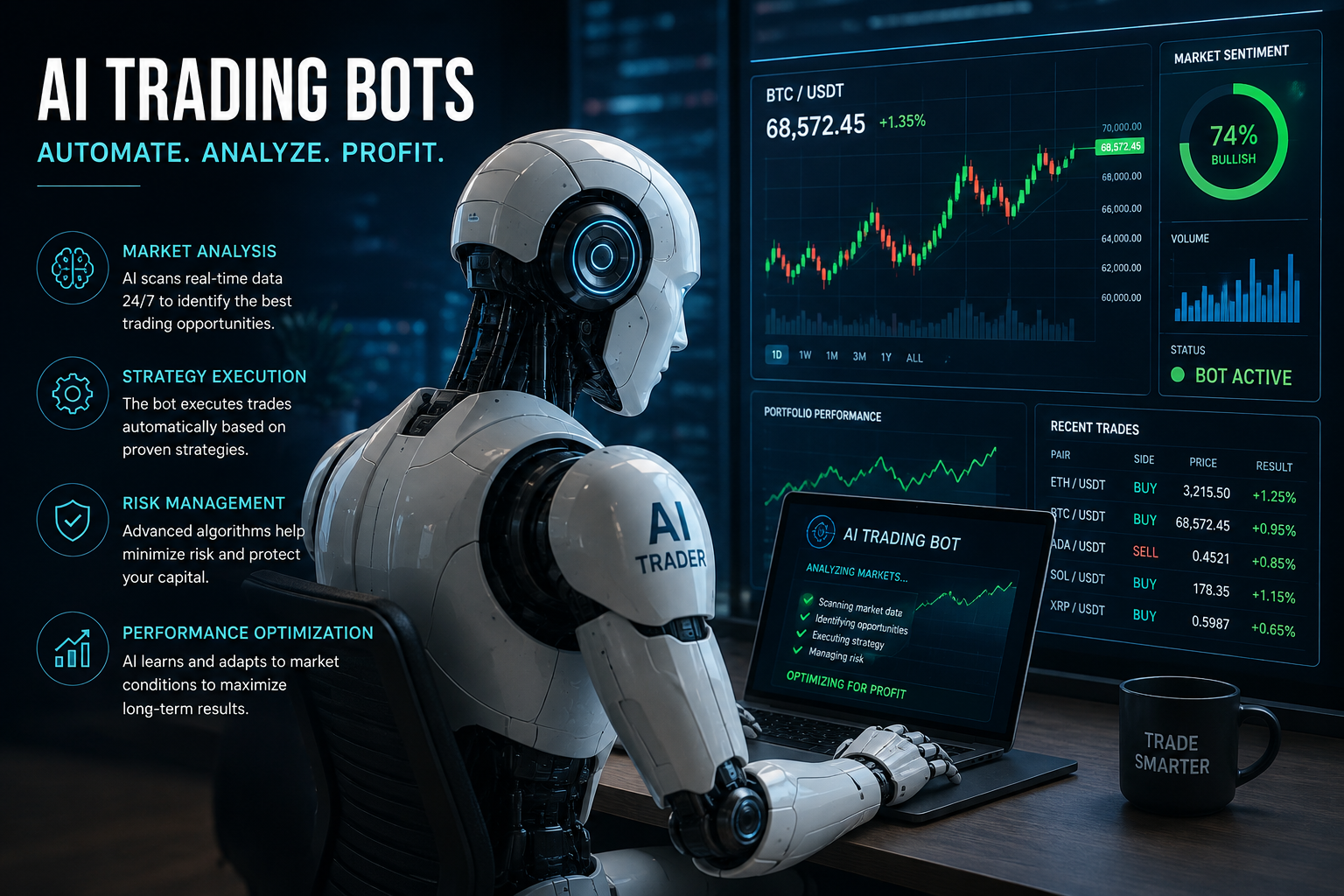
AI trading bots are changing how traders interact with financial markets by automating decisions that would normally require constant monitoring.
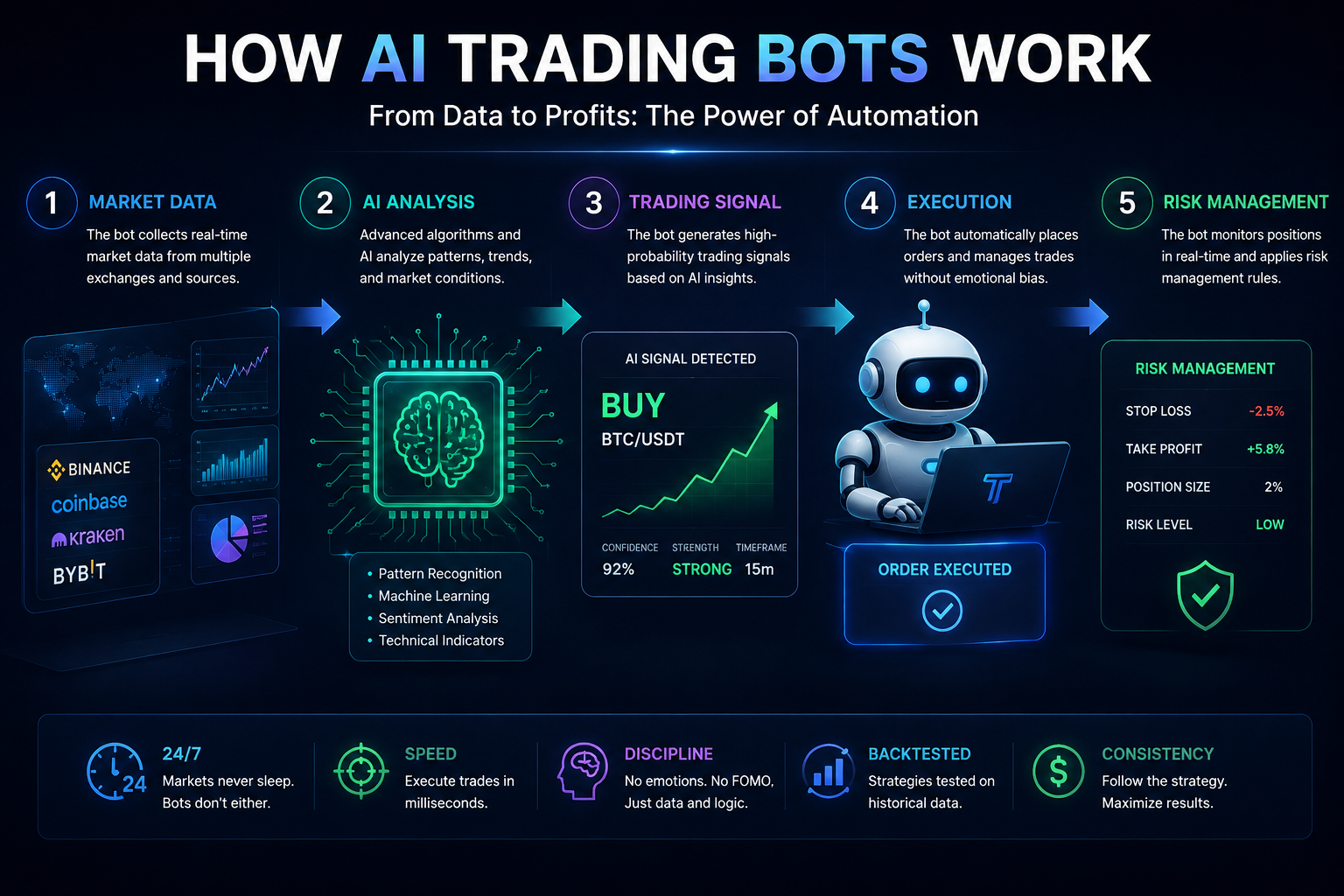
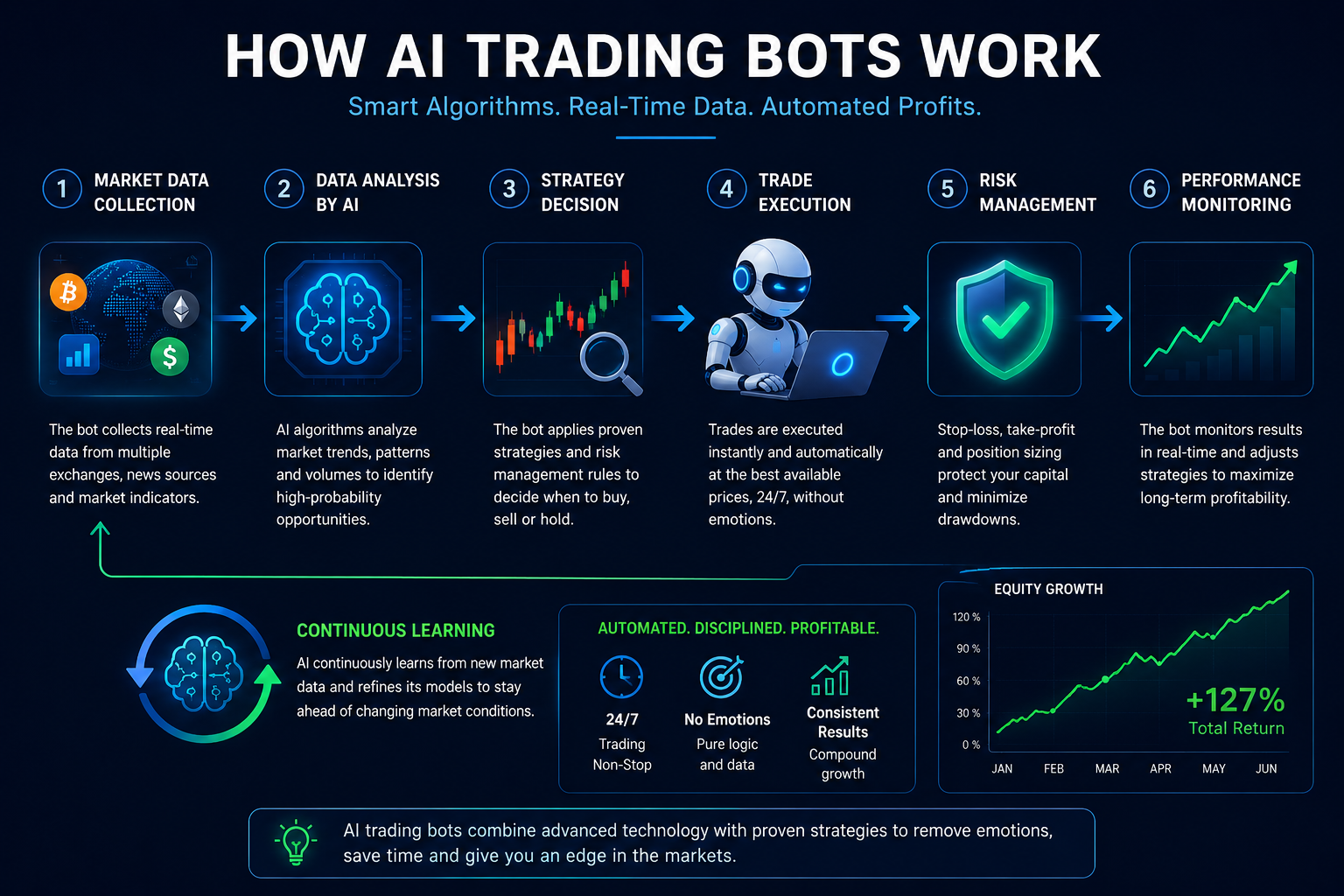
But how do AI trading bots work? These systems use predefined rules, algorithms and, in some cases, artificial intelligence to analyze market data, identify trading opportunities and automatically execute trades based on specific conditions.
Understanding how do AI trading bots work is essential before choosing an automated trading platform, because each bot follows different strategies, risk parameters and execution rules.
Understanding how do AI trading bots work is essential before choosing a platform, connecting an exchange, or allowing automated software to execute trades with real capital.
Understanding how do AI trading bots work is essential before choosing any automated trading platform or connecting it to a live brokerage account.
AI trading bots connect to trading platforms or cryptocurrency exchanges, usually through APIs, allowing the software to receive market data and execute orders automatically.
The bot continuously monitors factors such as price movements, technical indicators and predefined trading conditions. When specific criteria are met, it can open, manage or close a position without requiring the trader to manually execute every order.
More advanced systems may also use artificial intelligence and machine learning techniques to analyze larger amounts of data and adapt certain aspects of their decision-making process. However, automation does not eliminate market risk, and no AI trading bot can guarantee profitable results.
How AI Trading Bots Analyze the Market
AI trading bots analyze market data continuously, looking for conditions that match their programmed strategies.
Depending on the platform, they may evaluate price movements, trading volume, volatility, technical indicators and other market signals. Once predefined conditions are detected, the bot can automatically generate a trading signal or execute an order through the connected exchange.
This allows automated strategies to operate 24/7 without requiring the trader to constantly monitor the market.
In practice, understanding how do AI trading bots work requires looking at how market data is analyzed, converted into trading signals, and executed according to predefined risk parameters. This market analysis process is a key part of understanding how do AI trading bots work in real-world trading conditions.
Key Technologies Behind AI Trading Bots
Modern AI trading bots combine several technologies to automate market analysis and trade execution.
Algorithms process market data and apply predefined trading rules, while technical indicators can help identify trends, momentum and potential entry or exit conditions.
Some advanced platforms also incorporate machine learning models designed to recognize patterns within large datasets.
APIs provide the connection between the trading bot and the exchange, allowing orders to be executed automatically when the strategy’s conditions are met.
Understanding how do AI trading bots work also requires examining how predefined trading rules are converted into automated decisions.
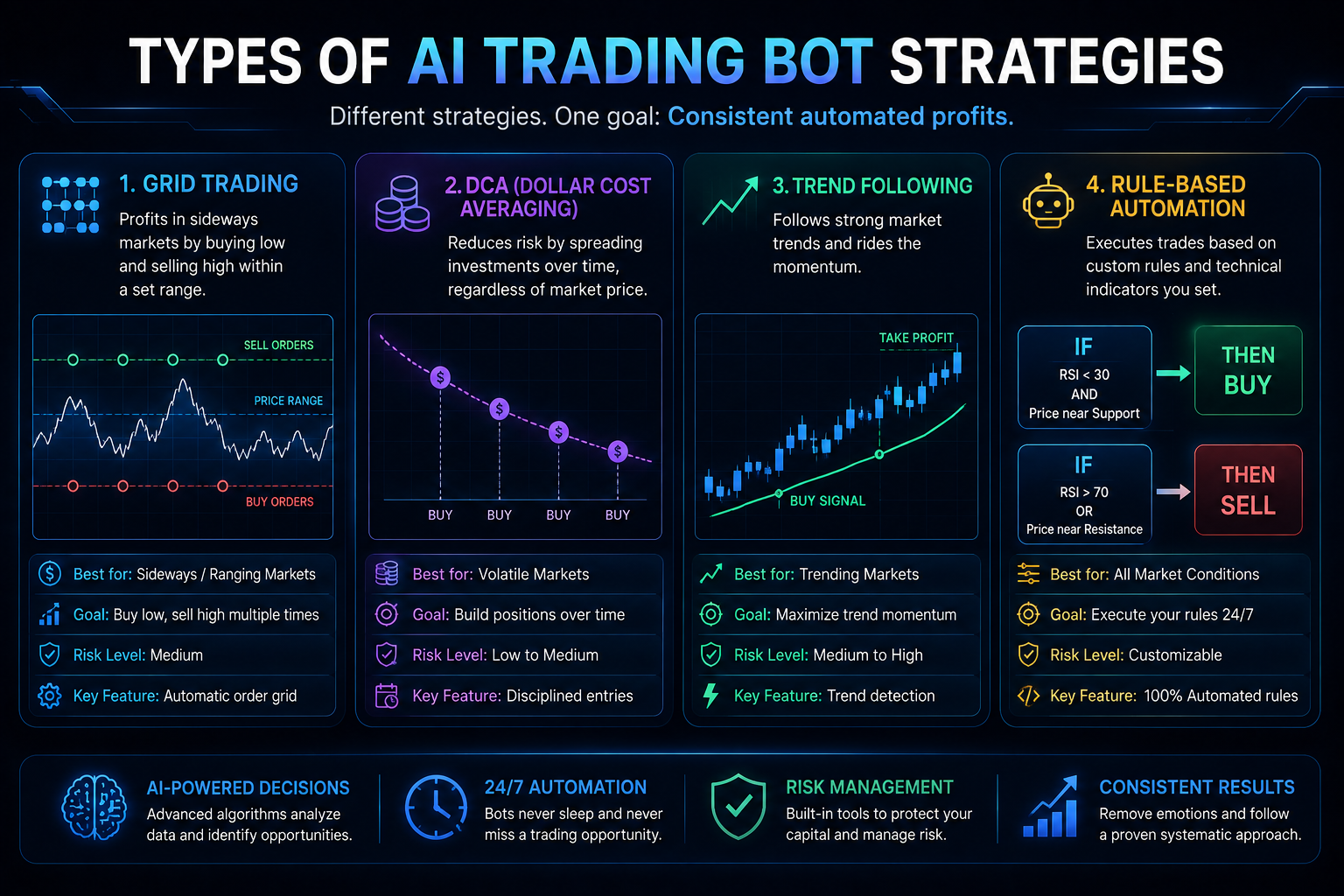
AI trading bots can automate several types of strategies depending on market conditions and the trader’s objectives.
GRID bots place multiple buy and sell orders within a defined price range and are commonly used in sideways markets.
DCA bots automate recurring purchases or entries to reduce the impact of short-term price fluctuations.
Trend-following bots attempt to identify and follow sustained market movements, while rule-based bots execute trades when predefined conditions are triggered.
Choosing the right strategy depends on market conditions, risk tolerance and trading experience.
To understand how do AI trading bots work, it is important to see how market data, indicators, and trading signals are processed in real time.
Benefits and Risks of Using AI Trading Bots
AI trading bots can offer several advantages, including 24/7 market monitoring, faster order execution and the ability to follow predefined strategies without emotional decisions such as fear or FOMO.
Automation can also help traders apply rules more consistently. However, trading bots involve significant risks.
Poor strategy settings, unexpected market volatility, technical failures or excessive leverage can lead to losses. No automated trading system can guarantee profits, so traders should test strategies carefully, use appropriate risk management and never invest more than they can afford to lose.
Are AI Trading Bots Profitable?
AI trading bots can be profitable under certain market conditions, but profitability is never guaranteed.
Results depend on the quality of the strategy, market volatility, trading fees, risk management and how the bot is configured.
A strategy that performs well in one market environment may perform poorly when conditions change.
Traders should therefore evaluate historical results carefully, use backtesting or demo environments when available, start with controlled capital and monitor automated strategies regularly rather than treating a trading bot as a guaranteed source of passive income.
How to Choose the Best AI Trading Bot
Choosing the right AI trading bot requires more than comparing advertised features.
Consider which exchanges and markets the platform supports, the available automation strategies, security measures, pricing, ease of use and risk-management tools.
Beginners may prefer simple no-code platforms, while experienced traders may need advanced customization, technical indicators and backtesting capabilities. Before connecting significant capital, understand how the bot operates and evaluate whether its features match your trading strategy and risk tolerance.
If you want to compare leading platforms after understanding how automated trading works, our Best AI Trading Bots 2026 comparison analyzes Bitsgap, Coinrule and Cryptohopper based on automation features, ease of use, strategy flexibility and overall value. Comparing these platforms can help you identify which solution best matches your trading experience and preferred automation strategy.
Order execution is another essential part of understanding how do AI trading bots work when connected to a broker or exchange.
AI Trading Bots: Risks and Limitations
AI trading bots can automate strategies and remove emotion from trading decisions, but they do not eliminate risk. Market volatility, unexpected price movements, technical failures and poorly configured strategies can still lead to significant losses.
No AI trading bot can guarantee profits, and past performance does not predict future results.
Traders should use appropriate risk-management settings, start with capital they can afford to lose and monitor automated strategies regularly rather than treating them as completely hands-off systems.
Risk management is fundamental when evaluating how do AI trading bots work, because automation cannot eliminate market risk or guarantee profits.
Frequently Asked Questions About AI Trading Bots
Are AI Trading Bots Legal?
AI trading bots are generally legal, but traders must comply with the laws, regulations and platform rules that apply in their jurisdiction. Some brokers or exchanges may restrict certain forms of automated trading, so users should always review the platform’s terms of service and applicable local regulations before using a trading bot.
Can You Lose Money With an AI Trading Bot?
Yes. AI trading bots can lose money because markets are unpredictable and no automated strategy can guarantee profits. Losses can result from sudden volatility, poor strategy settings, technical failures, trading fees or excessive risk. Traders should use appropriate risk management, test strategies when possible and avoid investing capital they cannot afford to lose.
How Much Money Do You Need to Start Using an AI Trading Bot?
The amount needed to start depends on the trading platform, strategy, exchange requirements and associated fees. Some AI trading bots can be configured with relatively small amounts of capital, while certain strategies may require more funds to operate effectively. Beginners should consider starting with a limited amount, understand all costs and test the strategy before increasing their capital.
Do AI Trading Bots Guarantee Profits?
Moomoo: A Trading Platform for Stocks and Options
Ultimately, understanding how do AI trading bots work helps traders evaluate automated systems based on strategy, execution, costs, and risk rather than marketing claims.
No. AI trading bots cannot guarantee profits. Automated systems operate according to programmed strategies and market data, but financial markets can change rapidly and unpredictably. Performance depends on factors such as strategy quality, market conditions, trading fees and risk management. Traders should be cautious of any service claiming guaranteed or risk-free returns.
Final Thoughts: How AI Trading Bots Work?
Understanding how AI trading bots work is essential before relying on automation for real trading.
These systems can analyze market data, monitor opportunities around the clock, and execute predefined strategies faster than a human trader. However, automation does not remove financial risk.
The most effective approach is to combine automation with disciplined risk management, realistic expectations, and regular strategy monitoring.
AI trading bots should be treated as tools that support trading decisions, not as systems that guarantee profits. Before using any automated strategy with real capital, traders should understand its rules, test its performance, and determine whether the level of risk is appropriate for them.